Meiji Era Japan Fashion Female Role Models: Inspiring Change

The Meiji Restoration (1868-1912) was a period of seismic transformation for Japan, a nation rapidly shedding its feudal past and embracing Westernization. This era of rapid modernization profoundly impacted every facet of Japanese society, and fashion was no exception. As Japan opened its doors to the world, new styles, materials, and sensibilities emerged, creating a dynamic and often contradictory sartorial landscape. Within this evolving world, certain women, through their choices, their influence, and their embrace of emerging ideals, became powerful Meiji era Japan fashion female role models, shaping perceptions and inspiring generations. Their stories, often intertwined with the broader social and political currents of the time, offer a fascinating glimpse into how women navigated tradition and modernity, and how their personal style became a statement of their evolving roles.
The Dawn of a New Aesthetic: Western Influences and Enduring Traditions
The Meiji era witnessed a fascinating juxtaposition of traditional Japanese attire and the burgeoning influence of Western fashion. While the samurai class was abolished and with it many of their sartorial markers, the elegant kimono remained a ubiquitous sight. However, the adoption of Western clothing, known as yōfuku, began to take hold, particularly in professional and official settings. This created a dual fashion landscape where women might wear a kimono for daily life or formal occasions while donning Western-style dresses for school, work, or social gatherings.
This period wasn’t just about adopting new clothes; it was about redefining what it meant to be a woman in a changing Japan. The emphasis shifted, in part, towards education and a more public role for women, albeit within the confines of societal expectations. This shift, in turn, influenced how women presented themselves, and the emergence of Meiji era Japan fashion female role models became a crucial element in navigating these new expectations.
The Rise of the "Modern Girl": Moga and Their Impact
One of the most iconic figures to emerge from this era was the moga, or "modern girl." These young women, often educated in newly established schools, embraced Westernized fashion, lifestyles, and attitudes. They frequented cafes, cinemas, and dance halls, their vibrant and often daring attire a stark contrast to the more demure image previously associated with Japanese womanhood.
Education and Emancipation: Schoolgirls as Trendsetters
The establishment of educational institutions for girls was a pivotal development. These schools, often influenced by Western pedagogical models, not only provided academic knowledge but also introduced new social norms and sartorial practices. The school uniforms themselves, often a blend of Japanese and Western elements, became a recognizable symbol of modern femininity.
-
The Sailor Suit: Perhaps the most enduring legacy of Meiji era education on female fashion is the adoption of the sailor suit. Initially inspired by naval uniforms, these practical and neat ensembles became the standard for schoolgirls across Japan. The simplicity and uniformity of the sailor suit symbolized a move towards a more egalitarian and disciplined approach to female education. For many young women, wearing the sailor suit was their first step into a more public and modern identity.
-
New Etiquette and Deportment: Beyond the uniform, these schools also emphasized deportment and etiquette, often influenced by Western ideals. This included how women walked, spoke, and carried themselves, all of which were reflected in their fashion choices. A well-dressed, confident young woman attending school was seen as a sign of progress and a positive example.
The Influence of the Imperial Family: Grace and Diplomacy
The Imperial family played a significant role in shaping Meiji era Japan fashion, particularly through the Empress Shoken. Her personal style and her public appearances served as powerful examples for women across the nation.
Empress Shoken: A Beacon of Western Elegance
Empress Shoken, the consort of Emperor Meiji, was instrumental in introducing and popularizing Western fashion within the Imperial court and, by extension, among the elite of Japanese society. Her deliberate embrace of Western attire for state occasions and public appearances sent a clear message about Japan’s engagement with the international community.
-
State Occasions and Diplomatic Dressing: Empress Shoken was often photographed in elegant Western gowns, adorned with jewelry and elaborate hairstyles. These appearances were not merely fashion statements; they were diplomatic gestures, signifying Japan’s readiness to engage with the West on equal footing. Her choice of attire projected an image of sophistication and modernity to foreign dignitaries and to her own people.
-
The "Empress Style": While the Empress herself may not have actively dictated trends, her visible adoption of Western clothing undoubtedly influenced the aspirations of many women. The idea of a refined and elegant woman in a Western dress became aspirational, and the Empress served as the ultimate role model for this ideal. Her grace and dignity in these new sartorial forms made them appear accessible and desirable.
Emerging Professions and the "Working Woman"
As Japan industrialized, new professional opportunities began to open up for women, albeit in limited capacities. These "working women" also contributed to the evolving fashion landscape.
The Office and the Factory: Practicality Meets Style
Women entering clerical roles, teaching positions, or factory work often found themselves adopting more practical Western attire. While the elaborate kimonos were unsuitable for many industrial and office environments, the adoption of Western-style skirts, blouses, and simpler dresses allowed for greater mobility and functionality.
-
The Blouse and Skirt Ensemble: The combination of a blouse and skirt became a popular choice for working women. This offered a degree of modesty while being more practical than traditional Japanese clothing. The availability of ready-made garments and sewing patterns also made Western fashion more accessible to a wider range of women.
-
Symbol of Independence: For many, wearing Western clothing for work was a symbol of their burgeoning independence and their contribution to the nation’s economic progress. These women, through their daily attire, demonstrated that women could be both productive members of society and embrace modern styles.
The Reimagining of the Kimono: Tradition in a Modern World
Despite the rise of Western fashion, the kimono did not disappear. Instead, it underwent its own evolution, adapting to the changing times and continuing to hold significant cultural weight.
The Kimono as a Statement of Heritage and Sophistication
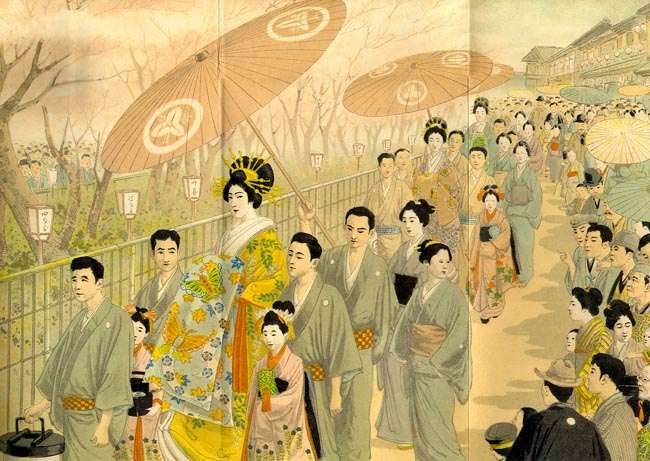
While Western dress dominated public and professional spheres, the kimono remained deeply ingrained in Japanese culture, especially for women. Its continued use, and the way it was worn, also became a form of personal expression and a subtle statement of identity.
-
New Designs and Silhouettes: Meiji era kimonos saw innovations in design, fabric, and dyeing techniques. While traditional patterns and styles persisted, there was also a growing experimentation with bolder colors and motifs that reflected the era’s dynamism. The way kimonos were worn – with specific obi styles and accessories – also evolved.
-
Formal Occasions and Personal Expression: For formal events, Online store for dresses your ultimate destination for exquisite style celebrations, and religious ceremonies, the kimono remained the attire of choice. Women used these occasions to showcase their personal taste through the selection of exquisite fabrics, intricate patterns, and elegant obi. The choice of a particular kimono could convey a woman’s social standing, her aesthetic sensibilities, and her connection to her heritage.
-
The "Modernized" Kimono: Some designers and wearers began to experiment with incorporating Western elements into kimono design, such as Western-style collars or shorter sleeves for greater practicality. This demonstrated a fluid approach to fashion, where tradition and modernity could coexist and even enrich each other.
The Influence of Popular Culture: Entertainers and the Avant-Garde
Beyond the more established figures, the world of entertainment and the emerging avant-garde also contributed to the discourse around Meiji era Japan fashion female role models.
Actresses and Performers: Pushing Boundaries
The burgeoning entertainment industry, including theater and early forms of cinema, provided a platform for women to experiment with more daring and flamboyant styles. Actresses, in particular, often adopted Western fashions or creatively blended them with traditional elements, becoming trendsetters for a more adventurous audience.
-
The Glamour of the Stage: Performers on stage and screen often wore elaborate and eye-catching costumes, many of which were inspired by Western theatrical traditions or the latest Parisian fashions. Their bold choices, visible to a wide audience, challenged conventional notions of modesty and feminine presentation.
-
Early Adopters of Western Trends: Actresses were often among the first to embrace new Western fashion trends, from elaborate hairstyles to specific garment silhouettes. Their public appearances in these styles would be emulated by aspiring fashion-conscious women.
The Enduring Legacy of Meiji Era Japan Fashion Female Role Models
The women who navigated the sartorial complexities of the Meiji era left an indelible mark on Japanese fashion and societal perceptions of women. They were not simply passive recipients of new trends but active participants in shaping their own identities and influencing those around them.
The powerful Meiji era Japan fashion female role models, whether they were empresses, schoolgirls, working women, or entertainers, demonstrated a remarkable ability to adapt and evolve. They showed that embracing modernity did not necessitate the abandonment of tradition, and that personal style could be a potent form of self-expression and empowerment. Their choices, made in a period of profound societal change, continue to resonate, reminding us of the dynamic interplay between fashion, culture, and the enduring spirit of women.
Frequently Asked Questions About Meiji Era Japan Fashion Female Role Models
Q1: Who were some of the most prominent Meiji era Japan fashion female role models?
While specific individuals might not be as widely known as modern celebrities, Empress Shoken is a significant figure who influenced Western fashion adoption. Beyond the Imperial family, educated schoolgirls who embraced new styles, working women who adopted practical attire, and actresses who pushed sartorial boundaries also served as influential role models.
Q2: Did women in the Meiji era exclusively wear Western fashion?
No, this was a period of transition. Women often wore a combination of traditional kimonos for many occasions and Western attire (yōfuku) for professional, educational, and some social settings. The kimono remained culturally significant and continued to be worn and evolved.
Q3: How did education influence female fashion in the Meiji era?
The establishment of schools for girls introduced new uniforms, such as the iconic sailor suit, and promoted Western grooming and deportment. This education helped to shape a new image of the modern, educated woman, which was reflected in her fashion choices.
Q4: What was the impact of Empress Shoken on Meiji era fashion?
Empress Shoken was a key figure in popularizing Western fashion at the Imperial court. Her elegant appearances in Western attire for state occasions served as a diplomatic statement and an aspirational example for many Japanese women, signifying Japan’s engagement with the West.
Q5: Were there any negative aspects associated with Meiji era Japan fashion female role models?
The adoption of Western fashion and lifestyles by some women, particularly the moga or "modern girls," was sometimes met with criticism or disapproval from more conservative elements of society who viewed these changes as a threat to traditional values. However, these figures were primarily seen as inspiring change.
We hope this exploration into the inspiring Meiji era Japan fashion female role models has illuminated the fascinating sartorial landscape of this transformative period. Which of these figures or fashion trends resonates most with you? Share your thoughts in the comments below!